
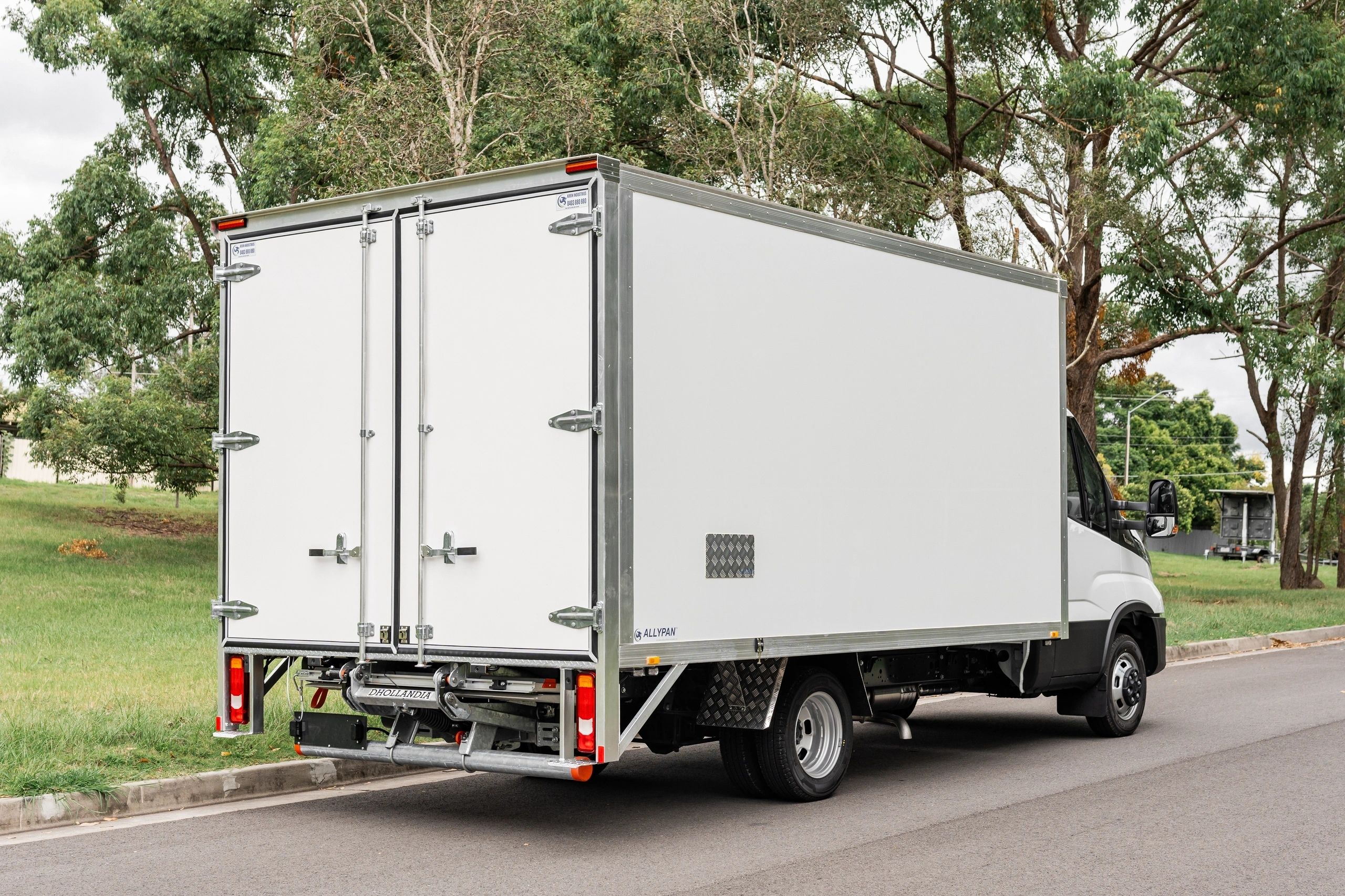
Why Going Light Could Be the Heaviest Decision You Make
In Australia’s demanding transport landscape, every kilogram counts. With fuel costs rising and margins tightening, fleet operators across New South Wales, Victoria, and Queensland are rethinking traditional truck body designs — because the real advantage isn’t bigger trucks, it’s lighter, more efficient builds.
Lightweight truck bodies are no longer a trend — they are a commercial advantage. Reducing tare weight by even 5–10% can unlock hundreds of extra kilograms in payload per trip, allowing operators to carry more, reduce trips, and improve overall profitability. For high-frequency operations like general freight, construction logistics, and last-mile delivery, this directly translates into lower cost per job and higher revenue per kilometre.
At Kirin, this shift has driven the development of ALLYPAN® ultralight bodies, engineered to deliver strength without unnecessary mass. By combining advanced materials with precision design, ALLYPAN bodies achieve significant weight reduction while maintaining durability and full compliance with Australian road regulations.
The result is simple:
- More payload capacity
- Improved fuel efficiency
- Reduced wear on chassis and tyres
- Stronger resale and fleet appeal
As the industry moves toward efficiency-driven operations, lightweight design is becoming a key purchasing factor — especially for rental fleets and transport operators focused on long-term cost performance.
The future of hauling isn’t bigger — it’s smarter, lighter, and more efficient.
The Material Revolution: How Advanced Composites and Alloys Are Redefining Truck Body Performance
In the competitive world of commercial transport, every kilogram directly impacts profitability. Fleet operators aren’t just looking for stronger bodies anymore — they’re looking for smarter weight reduction without compromising durability.
At Kirin, this has led to the development of ALLYPAN®, a proprietary lightweight body system engineered to maximise payload while maintaining structural integrity. By combining advanced composite panel technology with high-strength aluminium structures, ALLYPAN bodies significantly reduce tare weight compared to traditional steel builds — without sacrificing performance in demanding Australian conditions.
Unlike conventional bodies that rely on excess material for strength, ALLYPAN uses a hybrid construction approach — integrating lightweight composite panels with engineered alloy frameworks. The result is:
- Higher payload capacity per trip
- Improved fuel efficiency across fleet operations
- Reduced wear on chassis, tyres, and suspension
- Superior corrosion resistance in coastal and regional environments
This is why rental fleets and transport operators are increasingly adopting lightweight builds — not as an upgrade, but as a competitive advantage.
From the outback to urban delivery routes, ALLYPAN bodies are designed to handle real-world conditions while delivering measurable operational gains.
Maximising return on investment:
- Retrofit existing fleets with lightweight panel systems to unlock immediate payload gains
- Adopt modular designs for flexibility across different applications
- Prioritise low-maintenance, corrosion-resistant materials to reduce long-term costs
As efficiency standards tighten and fuel costs continue to rise, material choice is no longer just an engineering decision — it’s a business decision.
Steel vs. Lightweight: The Real Cost of Truck Body Materials
When it comes to truck body performance, the choice of material isn’t just an engineering decision — it’s a profitability decision.
While steel has traditionally been the industry standard for strength, modern lightweight systems like ALLYPAN® are redefining what operators can achieve in payload efficiency, fuel savings, and long-term operating costs.
Weight & Payload Advantage
Lightweight bodies can reduce tare weight by up to 30% compared to steel builds, directly increasing payload capacity. In practical terms, this can mean carrying an additional 1–2 tonnes per trip without exceeding legal limits — delivering immediate gains in productivity and revenue.
Fuel Efficiency
Less weight means less strain on the engine. Across typical Australian metro and regional operations, operators are seeing 8–12% fuel savings, especially in high-frequency delivery environments.
Maintenance & Durability
Steel bodies are prone to corrosion, particularly in coastal and humid regions like Brisbane. Lightweight systems using aluminium and composite materials offer:
- Superior corrosion resistance
- Reduced structural fatigue
- Lower ongoing maintenance requirements
This translates to less downtime and longer service life.
Total Cost of Ownership
While lightweight bodies may have a higher upfront cost, the return is realised quickly through:
- Increased payload revenue
- Reduced fuel consumption
- Lower maintenance and repair costs
For many fleets, the payback period is 12–24 months, after which the gains continue to compound over the vehicle’s lifecycle.
Do Lightweight Bodies Comply with Australian Road Regulations?
Yes — when properly engineered, lightweight bodies fully comply with all Australian regulatory requirements.
At Kirin, all ALLYPAN® bodies are designed and built in accordance with:
- Australian Design Rules (ADRs)
- National Heavy Vehicle Regulator (NHVR) guidelines
- Applicable vehicle modification codes (e.g. J1 where required)
Compliance is not just about total mass — it also includes:
- Correct load distribution across axles
- Maintaining braking performance
- Ensuring structural integrity under real operating conditions
Because ALLYPAN® reduces tare weight without compromising strength, it actually provides more flexibility within legal mass limits, allowing operators to maximise payload while staying compliant.
All builds are supported with appropriate documentation and engineering oversight, ensuring smooth registration and legal operation across all Australian states — particularly important for interstate fleets and rental operators.
Can I Customise a Lightweight Body for My Specific Needs?
Absolutely — customisation is one of the biggest advantages of the ALLYPAN® system.
At Kirin, every body is designed to suit the specific application, chassis, and operating conditions of the customer.
Is Retrofitting a Viable Option for Existing Fleets?
Yes — retrofitting is often one of the most cost-effective ways to upgrade fleet performance without replacing the entire vehicle.
At Kirin, we regularly retrofit existing chassis with ALLYPAN® lightweight bodies, allowing operators to unlock immediate gains in payload capacity and fuel efficiency while extending the working life of their trucks.
For many fleets, this means:
- Avoiding the capital cost of a new truck
- Improving payload and efficiency on existing assets
- Phasing upgrades across the fleet with minimal disruption
Most modern chassis are well-suited to retrofit, particularly when upgrades are aligned with:
- Scheduled maintenance or body replacement cycles
- End-of-life steel body replacements
- Fleet standardisation programs
Before proceeding, we assess:
- Chassis condition and service history
- Load requirements and application
- Remaining service life and ROI potential
Because ALLYPAN® bodies are significantly lighter, retrofitting can also improve axle load distribution and overall vehicle performance — not just payload.
Driving the Future: Why Innovation Can’t Wait
Staying competitive in today’s transport industry means rethinking how trucks are built — not just how they operate. With margins tightening and fuel costs remaining volatile, lightweight design is no longer an upgrade — it’s a strategic advantage.
At Kirin, this shift is already happening. ALLYPAN® lightweight bodies are helping fleets across Australia carry more payload per trip without exceeding axle limits — directly improving revenue, fuel efficiency, and overall fleet performance.
For operators, the benefits are immediate:
- More payload per run
- Fewer trips to move the same volume
- Reduced fuel consumption and operating costs
- Lower wear on vehicles and longer service life
Whether it’s long-haul routes or metro delivery in cities like Brisbane, Sydney, or Melbourne, lighter bodies improve efficiency, handling, and long-term cost performance.
Beyond compliance and cost, durability remains critical. ALLYPAN’s engineered construction delivers strong resistance to corrosion and impact, ensuring consistent performance even in harsh Australian conditions.
Originally published on the Kirin Industries website.
Back to Kirin news